Market Insights • 6 min read
The 2026 Urban Art Market Outlook: Why Street Art Outperforms Traditional Asset Classes
By Invest in Art Editorial Board • Published 14 October 2026 Share
The Shift From Fringe to Museum Grade Assets
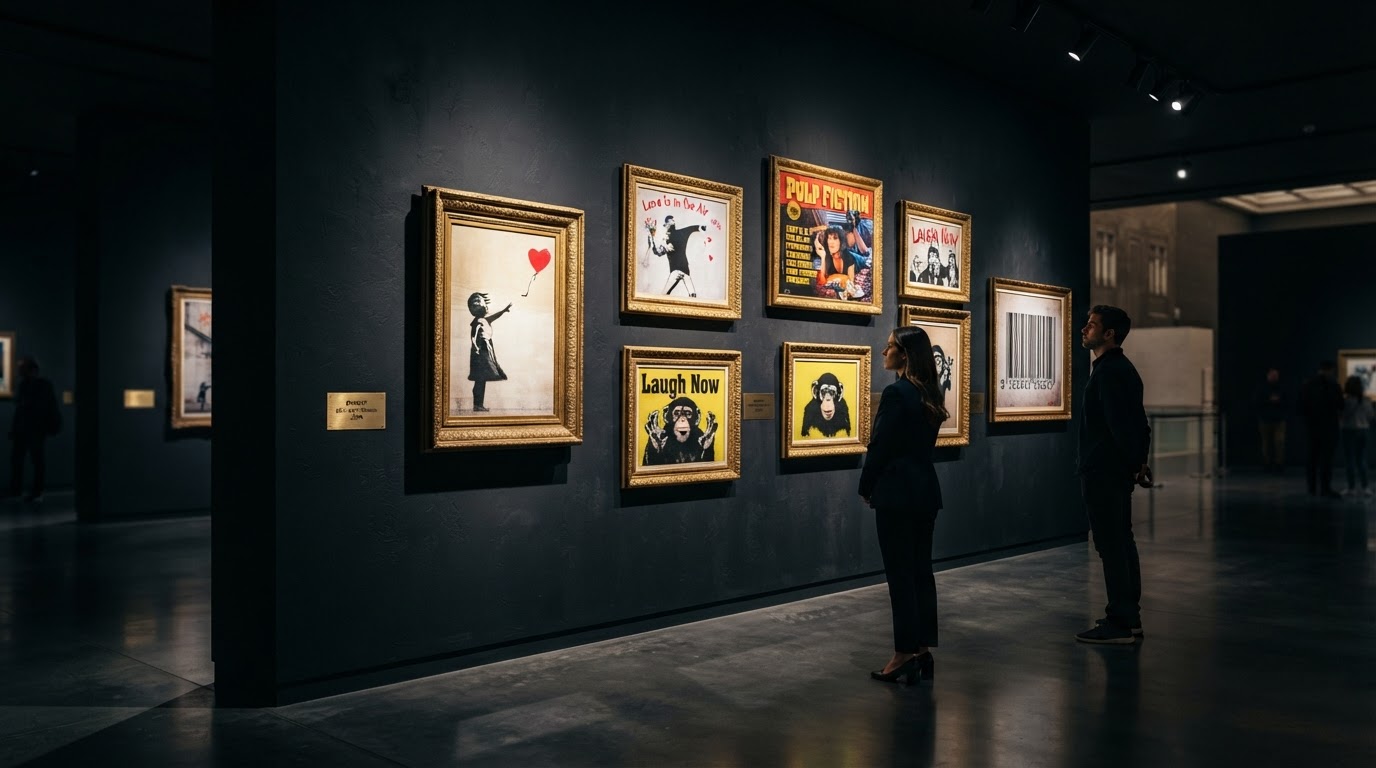
Over the last two decades, urban and street art has completed one of the most remarkable transformations in financial and cultural history. What began as illegal nighttime interventions on subway cars and industrial brick walls in Bristol and New York is now auctioned in the premier evening sales of Sotheby's, Christie's, and Phillips.
For high-net-worth collectors and alternative asset managers, street art offers a unique combination of global brand recognition, cultural significance, and provable scarcity.
Key Market Drivers in 2026
- Global Cultural Familiarity: Artists like Banksy and KAWS have achieved higher consumer recognition than 90% of traditional blue-chip modernists.
- Strict Provenance Standard: Authentication bodies such as Pest Control have established bulletproof secondary trade protocols.
- Asymmetrical Capital Appreciation: Early and mid-career street art acquisitions have historically shown strong risk-adjusted returns during macroeconomic fluctuations.
"Art is not merely something to view on a wall; it is a physical store of emotional and financial capital." – Miguel Angel, Founder of Invest In Art
Explore Contemporary Art Acquisitions
Discuss private market opportunities with our collector advisory team.
Request Collector Advisory